
SaaS SEO Consultant for B2B Products That Need Pipeline, Not Pageviews
I'm Raaquib Pathan, a SaaS SEO consultant for B2B products that already have users and now need organic search to produce trials, demos and pipeline. I led SEO in-house at a sales CRM, and I now work with software teams worldwide from Dubai, across Google and the AI answers buyers read first.
- +65%
- SaaS revenue in one year
- 8x
- SaaS free-trial signups from organic
- 50+
- Monthly signups from a new SaaS site
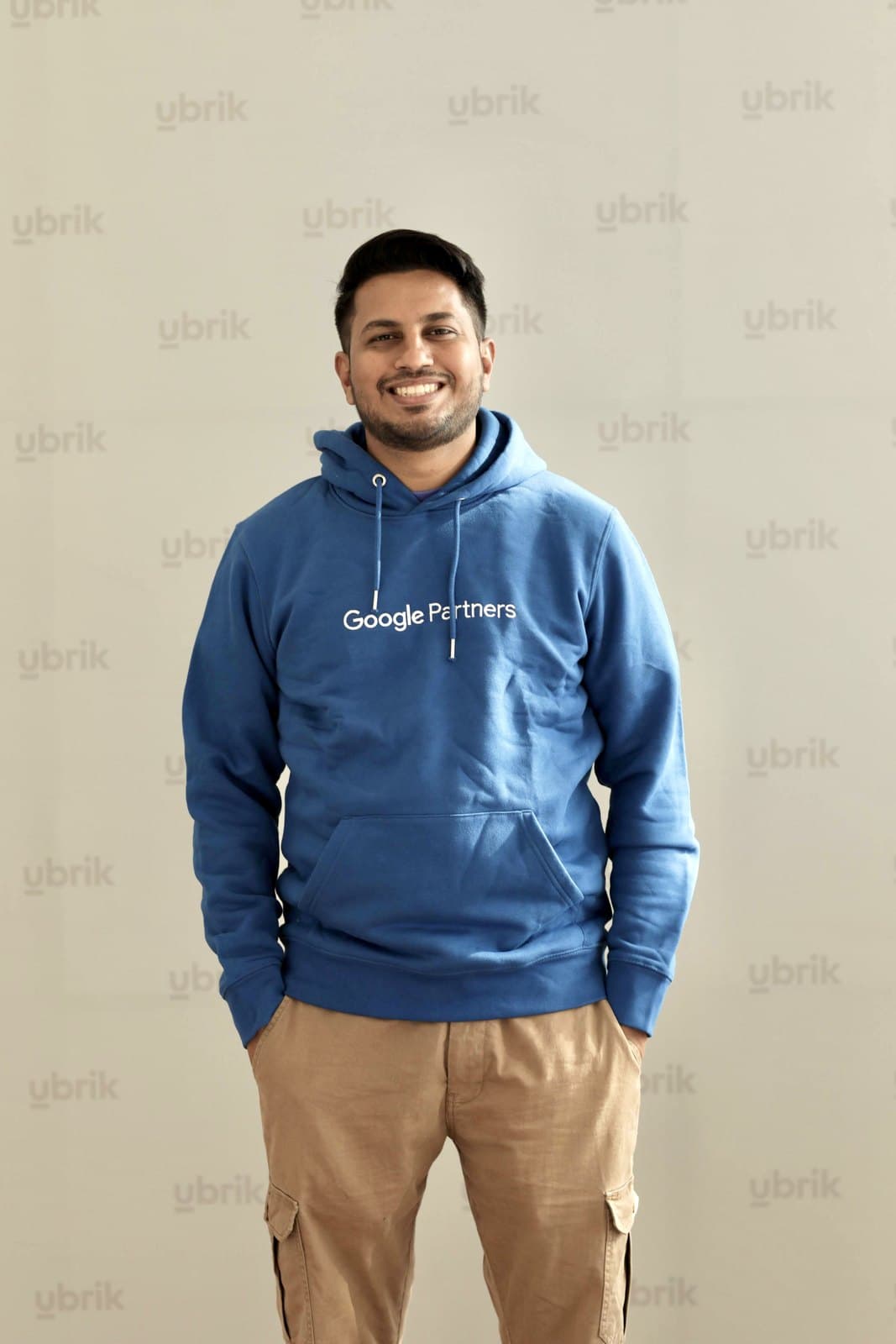
Raaquib Pathan
SEO & AI Search Consultant · Google Certified
What does a SaaS SEO consultant do?
A SaaS SEO consultant turns organic search into a signup and demo channel for a software product. The job is to map queries to funnel stages, fix the crawl problems JavaScript-heavy marketing sites create, build alternatives, comparison, use-case and integration pages, and report the outcome in trials, demos and pipeline rather than traffic.
By Raaquib Pathan · Updated
Key facts
- Raaquib Pathan led in-house SEO at Salesmate, a B2B sales CRM, from 2021 to 2022.
- A B2B sales CRM went from 12K to 35K organic sessions and 8x organic trial signups, with about 95% of revenue from search.
- A new SaaS site passed 50 signups a month and 100K GenAI impressions in three months.
- Built for product-led and sales-led teams from Seed to Series B and beyond.
Brands and institutions I have worked with






Is SaaS SEO consulting the right move for your product?
SaaS SEO consulting pays off when a product already converts and organic search is the channel lagging behind. It is a poor fit before launch, or when nobody can ship pages and fixes. The lists below are the filters I apply on every discovery call, so you can rule yourself in or out quickly.
A good fit if
- You have product-market fit and a working signup or demo flow, but organic brings in far fewer trials than paid.
- Your blog gets read, but those sessions rarely become trials, demos or product-qualified leads.
- Competitors own the "alternatives", "vs" and integration searches your sales team hears about.
- A marketer or developer on your side can publish pages and ship fixes within a sprint or two.
- You can share Search Console, GA4 and CRM or product analytics, so results are judged in pipeline.
Not a fit if
- You are pre-launch or still finding product-market fit. My startup AI SEO service suits that stage.
- You need guaranteed rankings or a signup target within 30 days. Nobody can honestly promise either.
- You want the most articles at the lowest cost per word. I plan fewer, deeper pages tied to revenue.
- Nobody can implement changes, or every site edit waits months in a release queue.
Which SaaS keywords turn into signups and demos?
For a SaaS product, the keywords that produce signups sit mostly at the decision end of the funnel: alternatives, comparisons, integrations and pricing. Awareness content still matters because it feeds links and AI citations. This map shows each query type, the page that should rank for it and the conversion it has to drive.
| Query type | Stage | Page that should rank | Conversion goal |
|---|---|---|---|
| Problem-aware questionse.g. “how to shorten a B2B sales cycle” | StageAwareness | Page that should rankGuide that names the job your product does | Conversion goalTemplate download or newsletter signup |
| Glossary and definitionse.g. “what is pipeline velocity” | StageAwareness | Page that should rankGlossary entry with a two-line definition | Conversion goalLinks to use-case pages, and AI citations |
| Templates and free toolse.g. “sales pipeline template” | StageConsideration | Page that should rankFree template or calculator behind a light signup | Conversion goalAn account to save or export the result |
| Use case and industrye.g. “CRM for real estate teams” | StageConsideration | Page that should rankUse-case page showing the real workflow | Conversion goalFree trial or a demo request |
| Competitor alternativese.g. “[competitor] alternatives” | StageDecision | Page that should rankAlternatives page with an honest feature and pricing table | Conversion goalTrial or demo, plus a switching offer |
| Head-to-head comparisonse.g. “[your product] vs [competitor]” | StageDecision | Page that should rankComparison page that says who each tool suits | Conversion goalDemo request or plan selection |
| Pricing intente.g. “[category] software pricing” | StageDecision | Page that should rankPricing page plus a crawlable pricing explainer | Conversion goalPlan selection or a sales call |
| Integrationse.g. “[your product] HubSpot integration” | StageRetention | Page that should rankOne page per integration, not a catch-all | Conversion goalActivation for current users, trials for prospects |
Examples show each query's shape. I size real terms for your category with Ahrefs and Search Console first.
How does SEO differ for product-led and sales-led SaaS?
Product-led and sales-led SaaS need different pages, calls to action and success metrics, even when they target similar keywords. A product-led funnel wants a visitor inside the product within minutes. A sales-led funnel wants a qualified conversation. Getting this wrong is the most common reason SaaS content ranks and still fails to convert.
| What changes | Product-led (PLG) | Sales-led |
|---|---|---|
| Primary conversion | Product-led (PLG)Self-serve signup or free trial | Sales-ledDemo request or contact-sales form |
| Pages that carry revenue | Product-led (PLG)Templates, free tools, integrations and use-case pages | Sales-ledComparison, alternatives, industry and ROI pages |
| Call to action | Product-led (PLG)Start free, no card required, shown above the fold | Sales-ledBook a demo, backed by case studies and security details |
| Content depth | Product-led (PLG)Short and practical, reaching the product fast | Sales-ledLonger, built for a buying committee that shares links |
| Headline KPI | Product-led (PLG)Organic signups that activate within the first week | Sales-ledOrganic demos that become sales-qualified opportunities |
| Attribution window | Product-led (PLG)Days: signup follows the visit closely | Sales-ledMonths: first touch and closed deal sit far apart |
How is SaaS SEO measured?
SaaS SEO is measured in the numbers your board already watches: organic signups, demo requests, activation, pipeline and revenue. Rankings and sessions are leading indicators, not results. Every metric below comes from a named source, so the monthly report can be checked against your own dashboards rather than taken on trust.
| Metric | Why it matters | Measured in |
|---|---|---|
| Organic signups and trials | Why it mattersProof that organic visitors want the product, by landing page | Measured inGA4 + product analytics |
| Demo requests from organic | Why it mattersThe sales-led equivalent of a signup, and the input to pipeline | Measured inGA4 + CRM |
| Activation from organic | Why it mattersShows whether search brings users who reach the product's key moment | Measured inProduct analytics |
| Pipeline and MRR attributed to organic | Why it mattersConnects pages to money, which is how SEO keeps its budget | Measured inCRM |
| Assisted conversions | Why it mattersCaptures the comparison page read three weeks before the demo was booked | Measured inGA4 attribution paths |
| Non-brand clicks to money pages | Why it mattersSeparates new demand from people who already know your name | Measured inGoogle Search Console |
| AI referrals and citations | Why it mattersTracks sessions from ChatGPT and Perplexity, and whether answers name you | Measured inGA4 + prompt checks |
Which page is for you?
- Early-stage or pre-launchStartup AI SEOPre-launch or early-stage, with AI answers as the first goal? Start with startup AI SEO.Go to Startup AI SEO
- Traction and scalingSaaS SEO (this page)Paying customers, and organic needs to carry more pipeline? You are on the right page.
How does a SaaS SEO engagement run?
A SaaS SEO engagement with me runs in six steps, starting from revenue data and ending with a monthly report your finance team would accept. Bottom-of-funnel pages come before top-of-funnel content because they convert soonest. Each step ends with something you keep, whether or not we continue working together.
Revenue and data audit
I connect Search Console, GA4 and your CRM to see which pages produce signups and demos, not just sessions.
You get: a baseline of organic signups, demos and pipeline by landing page.
Funnel keyword map
Queries are grouped by stage, matched to a page type and checked against the competitors you actually lose deals to.
You get: a prioritised page map, scored by revenue potential and effort.
Technical and architecture fixes
SaaS sites often span a marketing site, app subdomain, docs and help centre. I check rendering, canonicals and internal links across all of them.
You get: a developer-ready ticket list, ordered by impact.
Decision-stage pages first
Alternatives, comparison, use-case and integration pages go live first, with calls to action matched to a product-led or sales-led funnel.
You get: page briefs, or finished pages, for the first decision-stage batch.
Content engine and authority
Problem-aware guides, templates and glossary entries follow, supported by partner, integration and co-marketing links that fit the category.
You get: a monthly content calendar and a link plan.
Report, learn and reinvest
Each month we review what moved signups and pipeline, drop what didn't and back the page types that convert.
You get: a monthly report tying organic search to trials, demos and revenue.
SaaS SEO in the age of AI search
SaaS buyers now ask ChatGPT, Gemini and Perplexity for a shortlist before they open a review site. Those answers lean on comparison pages, documentation and third-party listings. SaaS SEO today means being quotable in that shortlist, and measuring whether AI referrals turn into signups, not only whether Google ranks the page.
Prompts buyers type into AI assistants
- Best CRM for a ten-person sales team
- Alternatives to [competitor] with better reporting
- Which cold email tool integrates with HubSpot?
- Is [product] good for agencies?
- Cheapest [category] tool with an API
Comparison pages feed AI shortlists
Assistants summarise honest comparison pages. Tables of plans, limits and best-fit users are easier to quote than marketing copy.
One consistent product story
Category, pricing and integrations should match across your site, docs and review listings, so a model doesn't confuse you with a rival.
Docs and help centres are citation sources
Assistants answer many how-to questions from documentation, so docs must be crawlable, not blocked or rendered only in the browser.
AI referrals measured to signup
I track sessions from ChatGPT and Perplexity in GA4 through to signups, as I did on the SaaS case study with 200+ LLM referral visits.
SaaS results I can point to
My SaaS SEO results cover both ends of the product lifecycle: a scaling sales CRM where search became the main revenue channel, and a brand-new B2B SaaS site that went from zero authority to steady signups within a quarter. Both are documented with Search Console, GA4 or Ahrefs data in the case studies.
The CRM result took 18 months of compounding work. The new site's early gains came from answer-first pages built for AI search. Your timeline depends on authority, competition and how fast your team ships.
12K → 35K
Organic sessions
+65% revenue in one year · about 95% of revenue from search
B2B sales CRM, global
Read the B2B SaaS case study100K
GenAI impressions in Search Console
2,000+ clicks a month · 200+ LLM referral visits · 50+ signups a month
Brand-new B2B SaaS site, first three months
Read the AI SEO case studyWhat you get and how we can work together
A SaaS SEO engagement produces working assets, not a slide deck: a keyword and page map, a technical backlog, page briefs, a content and link plan, and a pipeline dashboard. You can start with an audit and roadmap, move to monthly consulting, or bring me in as a fractional SEO lead.
| Deliverable | What it includes |
|---|---|
| SaaS keyword and page map | What it includesEvery target query assigned to a funnel stage, page type and conversion goal. |
| Technical audit and ticket backlog | What it includesIssues across the marketing site, docs and app subdomain, scored by impact and effort. |
| Decision-stage page briefs | What it includesAlternatives, comparison, use-case and integration briefs with angle, outline and CTA. |
| Content and link plan | What it includesA monthly calendar plus partner and integration link targets that fit the category. |
| Organic pipeline dashboard | What it includesA Looker Studio view joining Search Console, GA4 and CRM or product data. |
| AI visibility check | What it includesWhich buyer prompts name you, which name competitors, and which pages they cite. |
Ways to work together
SaaS SEO audit and roadmap
A one-off project: data audit, technical review and a prioritised 12-month page map your team can run with.
Typically 3–4 weeks
Monthly SaaS SEO consulting
Ongoing strategy, briefs, reviews and reporting, with your team or freelancers shipping the pages.
Six months minimum recommended
Fractional SEO lead
I own organic search inside your growth team: roadmap, hiring input, mentoring and outcomes.
Ongoing, reviewed each quarter
I don't publish SaaS SEO prices because scope varies with site size and how much your team ships. My SEO cost guide shows typical market ranges. Read the SEO cost guide.
Why work with me on SaaS SEO
Raaquib Pathan has done SaaS SEO from the inside, as the in-house SEO lead at a sales CRM, and from the outside, as a consultant for SaaS brands in Europe and beyond. That mix matters: I know what a product team will actually ship, and how organic search gets judged in a revenue meeting.
I have run SEO inside a SaaS company
As SEO Team Lead at Salesmate, a B2B sales CRM, I built the content and internal-linking engine that made organic a core growth channel. I plan SEO work around product release cycles instead of fighting them.
Links that suit SaaS brands
I ran QuickMail's off-page SEO for more than six months, and my AI SEO case study earned unpaid links from European government sites. SaaS authority comes from partners and real coverage, not bought guest posts.
Google and AI answers in one plan
A comparison page that ranks on Google is also what ChatGPT quotes in a shortlist. I plan both together, so a SaaS team doesn't pay twice for work on pages that serve the same buyer.
More about my background on the about page and in my press coverage and bylines.
What clients and colleagues say
Two recommendations from people I have worked with, both verified on LinkedIn.

I worked with Raaquib on QuickMail's off-page SEO for a period of over 6 months. He is dedicated, resourceful, he has a can-do attitude, and he has experience in many areas of SEO. He helped us achieve great results during his time with us, and I warmly recommend him for any future off-page SEO projects.

We've had the privilege of working with Raaquib for the past 7 years, and he has been leading our SEO team with remarkable dedication. What stands out most about him is his focus on building a strong, sustainable foundation. While his strategies are not about chasing quick wins, the long-term results are tremendous and lasting. Thanks to the solid groundwork he creates, we've seen consistent growth and inbound opportunities that continue to compound over time.
SaaS SEO questions, answered
These are the questions SaaS founders and marketing leads ask most before bringing in outside SEO help: cost, timelines, in-house versus outside help, tools, reporting and AI search. Each answer leads with the short version. If yours isn't here, a strategy call is the fastest way to get a straight reply.
It depends on scope: the size of your site, whether your funnel is product-led or sales-led, and how much of the work your own team ships. I quote after a strategy call rather than publishing a rate card that fits nobody. My SEO cost guide sets out typical market ranges if you want a benchmark before we speak.
Related: SEO cost guide
SaaS SEO usually shows a measurable lift in organic signups or demos within three to six months, then compounds. Decision-stage pages such as alternatives and comparisons convert soonest, while blog content builds slower authority. The sales CRM in my case studies grew over a year and a half, and a new site in my AI SEO case study passed 50 signups a month within three months.
Bring in an outside expert first if nobody on your team has led SaaS SEO before, then build in-house once the playbook works. A consultant brings a tested process from day one and usually costs less than a senior full-time salary. An in-house team makes sense when you publish at volume. Many teams keep a consultant as fractional lead while junior marketers execute.
I use Google Search Console, GA4, Ahrefs and Looker Studio for SEO work, and I read your own CRM and product analytics for signups, activation and pipeline. Joining those sources is what turns a ranking report into a revenue report. I work inside your existing stack, so nothing needs rebuilding before we start.
My monthly SaaS SEO report leads with organic signups, demo requests and pipeline, then explains which pages and query groups produced them. After that come leading indicators: non-brand clicks, rankings for decision-stage pages, technical issues fixed and AI referrals. Every number links back to its source, and each report ends with what we will change next month and why.
Either model works, and we agree it during scoping. I always write the briefs and the keyword map, and I review every decision-stage page before it goes live, because those pages carry revenue. Some teams have me draft the alternatives and comparison pages while their marketers handle blog posts. Others keep all writing in-house and use me for strategy and review.
SaaS SEO and AI search reinforce each other, because the pages AI tools quote are the same well-structured comparison, integration and documentation pages that rank on Google. I make those pages easy to cite, keep your product details consistent across the web, and track AI referrals in GA4. On one new SaaS site this produced 200+ LLM referral visits in three months.
Yes. Most of my SaaS work is international: the sales CRM served a global market, and my AI SEO case study covers a German B2B SaaS platform in the European funding space. I am based in Dubai, which gives me working hours that overlap with Europe, the Middle East and much of Asia, and I work remotely with teams wherever they are.
Make organic your most reliable source of signups and demos
Book a free strategy call. I'll look at where your organic signups come from today, which decision-stage pages you're missing, and how AI answers describe your product.