What was the challenge?
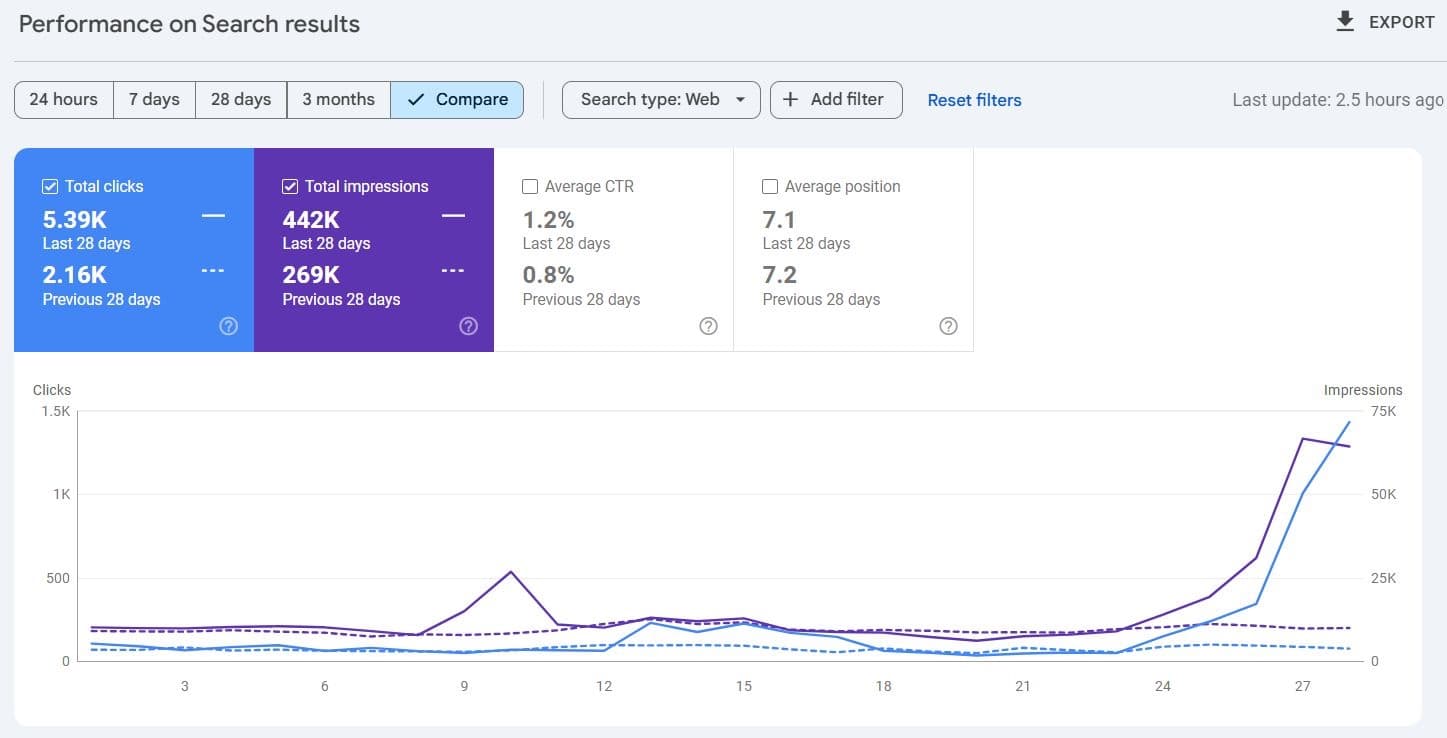
A group running six country sites and two languages had five agencies and no shared standards. Hreflang was broken across markets, faceted URLs burned crawl budget, and SEO tickets sat for months behind product work. Revenue from brand search hid how weak non-brand visibility really was.
What was the strategy?
- 01
Set one technical standard and one owner across countries
- 02
Fix the crawl and hreflang problems at template level
- 03
Put SEO requirements into the product release process
What exactly was done?
3 moves, each with what was done and why it mattered.
- 01Technical SEO
Audited logs across all six sites
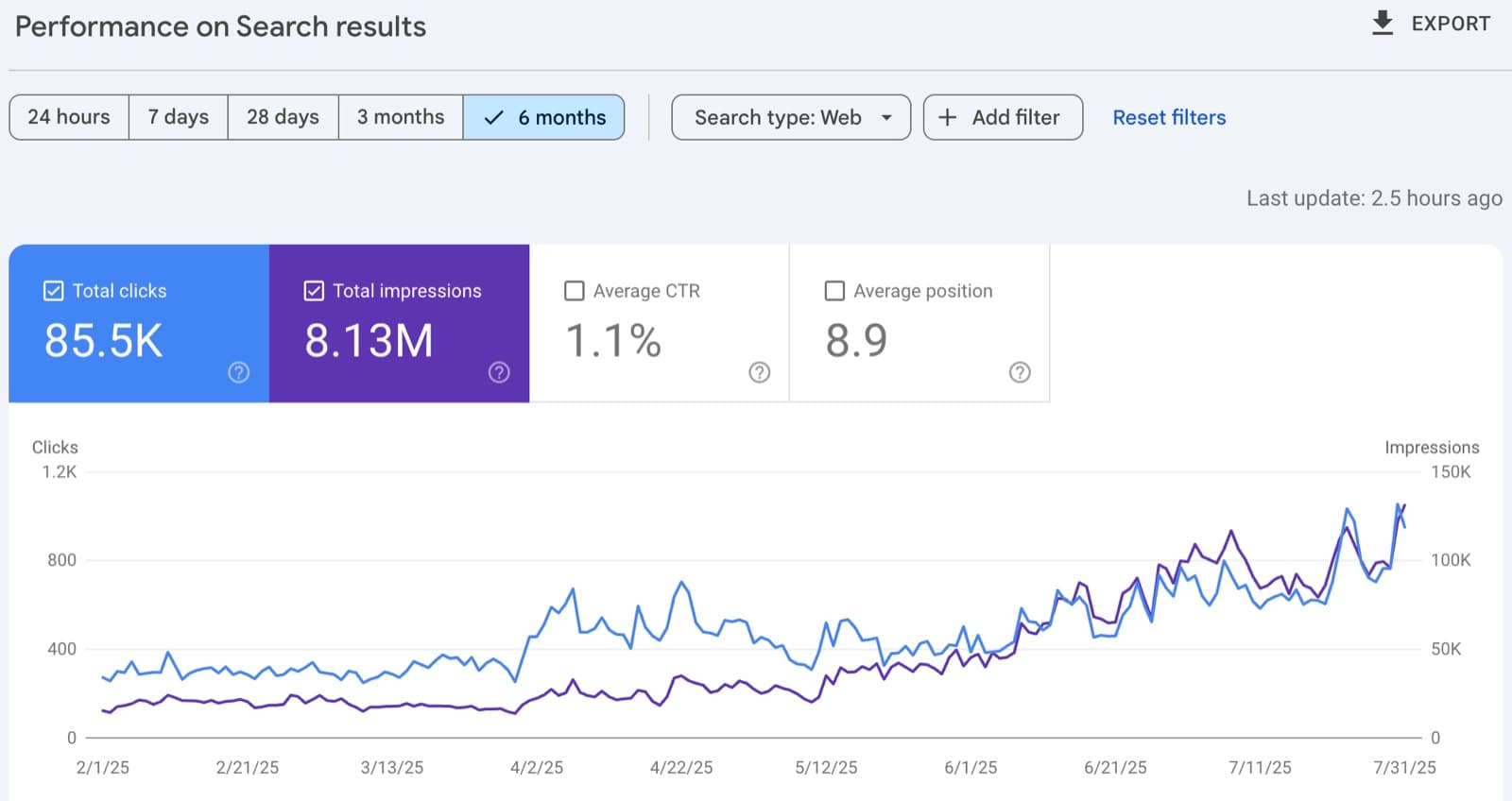
Analysed server logs and crawl data, then blocked or consolidated 287K low-value URLs and rebuilt hreflang as one central mapping.
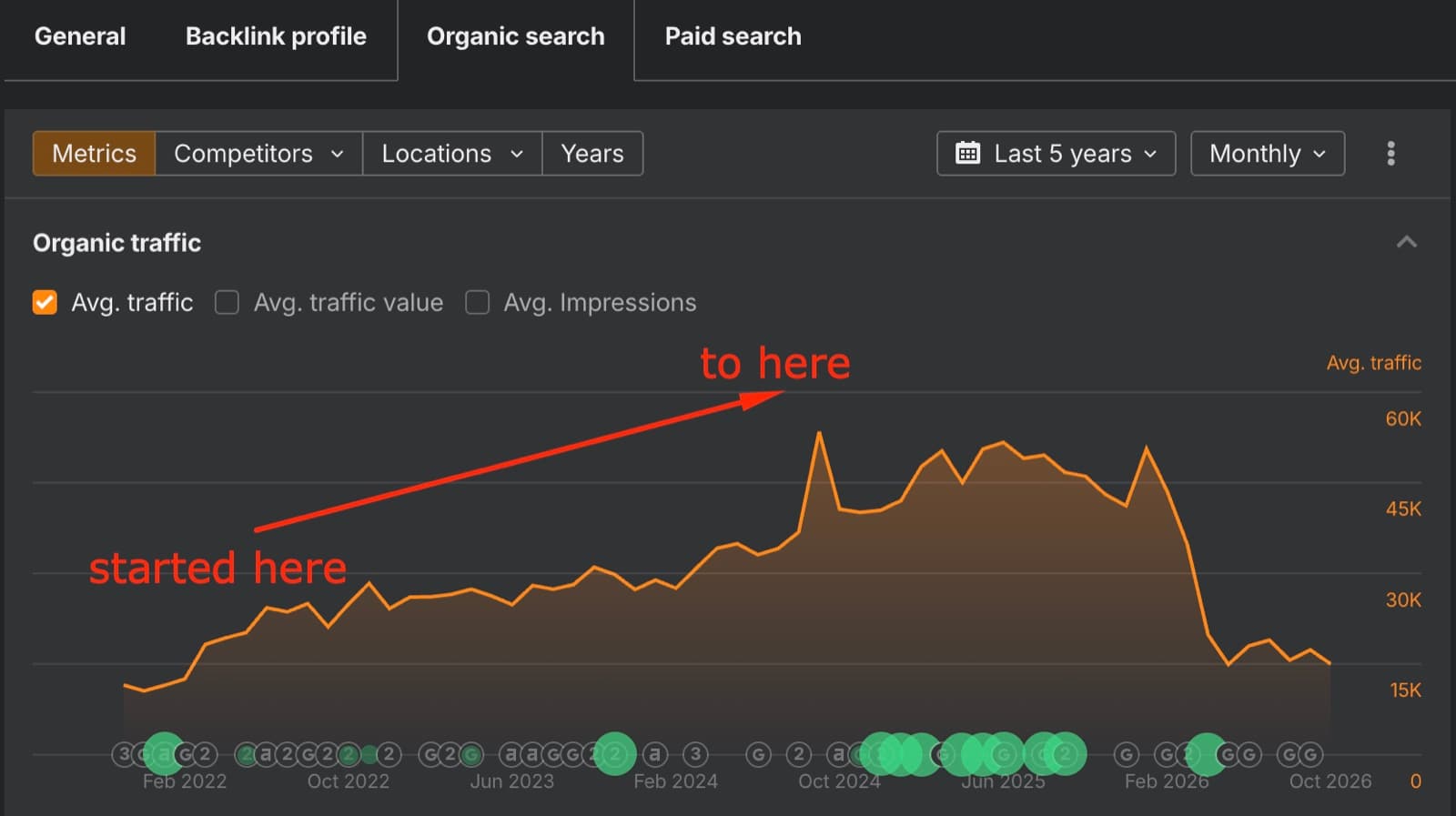
Why it mattered: At this scale, a single template decision affects millions of crawls. Fixing root causes moved more traffic than any number of new articles.
- 02Governance
Added SEO to the release process
Wrote acceptance criteria for development tickets, added automated checks to staging, and held a fortnightly review with product and engineering.
Why it mattered: Enterprise SEO usually fails in the backlog. Getting into the sprint process cut average fix time from months to weeks.
- 03Reporting
Reported non-brand performance to the board
Separated brand from non-brand, and reported revenue by country and category through a shared Looker Studio dashboard.
Why it mattered: Leadership could finally see where search was growing, which ended arguments between country teams about priorities.
What do I stand for?
Fix templates, not pages
One template change can do the work of a thousand page edits.
SEO belongs in the sprint
If it is not in the release process, it does not ship.
About this case study
- This is an example engagement: a representative project showing how I approach SEO for this industry and the kind of results the approach is built to deliver.
- The business, figures and charts are examples, not a specific client's verified data. For verified results, see my SEO case studies.
Industry guides
Enterprise SEO Consultant in Dubai
Less about new pages, more about making a large organisation ship SEO fixes on time.