
SEO Stats in the UK: AI Search Trends in 2026
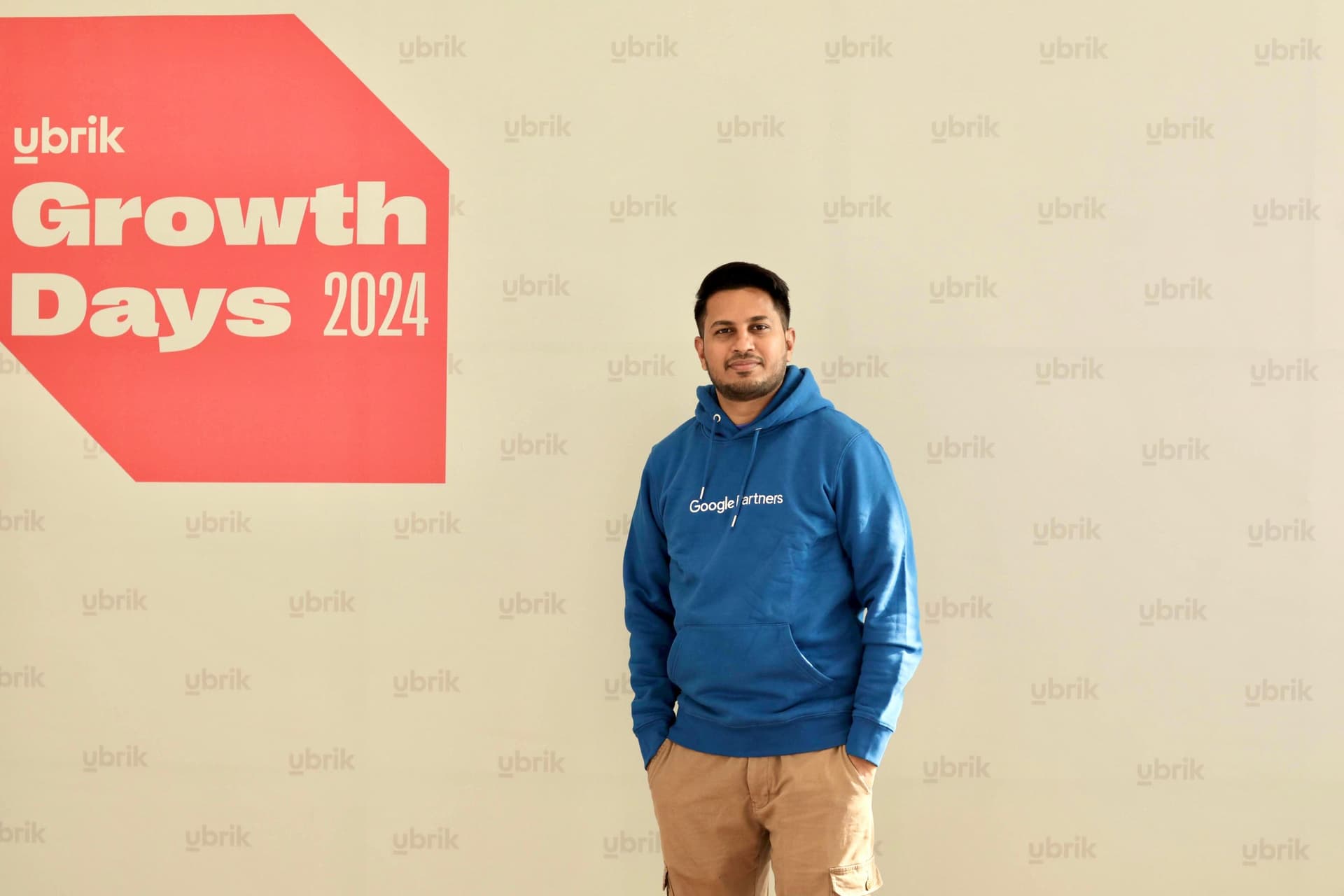
Raaquib Pathan
Last updated September 2026 · 14 min read
Key takeaways
- More than 90% of all general search queries in the UK ran through Google Search, the regulator found in October 2025. (Source: Strategic market status investigation into Google's general search services, Competition and Markets Authority)
- 75% of UK online adults read AI-generated search summaries at least sometimes in late 2025, and 42% read them often or always. (Source: Adults' Media Use and Attitudes Report 2026, Ofcom)
- 8% of US Google visits with an AI summary produced a click on a traditional result in March 2025, against 15% of visits without one. (Source: Pew Research Center)
- 1.8 billion UK visits went to ChatGPT in the first eight months of 2025, up from 368 million in the same period of 2024. (Source: Online Nation Report 2025, Ofcom)
- 17% of UK adults believed a website appearing in search results would contain accurate and unbiased information in late 2025, down from 27% a year earlier. (Source: Adults' Media Use and Attitudes Report 2026, Ofcom)
- 35% of UK businesses with 10 or more employees used at least one AI technology in June 2026, up from around 12% in late 2023. (Source: Artificial intelligence in UK businesses: 2023 to 2026, Office for National Statistics)
- £10 billion was spent by more than 200,000 UK firms on Google search advertising during 2024. (Source: Strategic market status investigation into Google's general search services, Competition and Markets Authority)
This page collects the SEO stats in the UK that hold up to checking. Every one of these 76 figures was read inside its source document and is attributed to the organisation that produced it, not to whoever repackaged it. The sources are Ofcom, the Office for National Statistics, the Competition and Markets Authority, Pew Research Center, Eurostat and the Advertising Association, all published between July 2025 and July 2026.
The 2026 picture is not one of search collapsing. Google still handles more than nine in ten UK search queries. What has changed sits above the links: AI summaries now front the results page, three-quarters of UK adults read them, and the clicking behaviour underneath has measurably shifted.
Google's grip on UK search
The Competition and Markets Authority spent nine months examining Google's position before designating it in October 2025. The figures below come from that decision and from Ofcom's audience measurement, and they set the baseline any UK search strategy works against.
- More than 90% of all general search queries in the UK were handled by Google Search, measured across traditional search and search-grounded AI queries in 2025.
- 3 billion web searches were made on Google from the UK in August 2025.
- Almost 9 billion Google Search page views were recorded among UK adults in October 2025.
- Under 5% was Bing's share of both UK search queries and UK search advertising in 2025, making it the largest of Google's traditional rivals.
- 15 years have passed without any traditional general search provider materially growing its position relative to Google in the UK.
- 82% of UK online adults used Google Search in May 2025, down from 83% in May 2024 and 86% in May 2023.
- 3 June 2026 was the date the CMA imposed a publisher conduct requirement obliging Google to give UK publishers a control over whether their content powers AI Overviews and AI Mode.
Sources: search-share, rivals and conduct figures, Strategic market status investigation into Google's general search services, Competition and Markets Authority and CMA case page; search-volume and page-view figures, Online Nation Report 2025 and Adults' Media Use and Attitudes Report 2026, Ofcom.
How often AI Overviews appear, and what they do to clicks
An AI Overview is a generated summary that Google places above the traditional blue links, assembled from web sources and shown in response to a query. Answer Engine Optimisation, or AEO, is the practice of structuring content so it is selected and cited inside those generated answers rather than only ranked beneath them.
The most rigorous behavioural evidence available is Pew Research Center's browsing-panel study. It covers US users, and Ofcom cites the same study as a proxy for the UK, so treat the click figures as directional for a British audience rather than measured on one.
- Around 30% of keyword search queries in the UK delivered AI-supported overviews as of Ofcom's December 2025 assessment.
- 18% of all Google searches in the study produced an AI summary in March 2025.
- 8% of visits where a US Google user encountered an AI summary produced a click on a traditional search result in March 2025.
- 15% of visits without an AI summary produced a click on a traditional search result over the same period — nearly twice the rate.
- 1% of visits to a US Google page carrying an AI summary produced a click on a source cited inside that summary in March 2025.
- 26% of US Google pages with an AI summary ended the user's browsing session in March 2025, against 16% of pages showing only traditional results.
- 67 words was the median length of an AI summary in the March 2025 sample.
- 88% of AI summaries examined cited three or more sources, while only 1% cited a single source.
- 15% of sources listed in AI summaries were Wikipedia, YouTube or Reddit, against 17% of sources in standard results.
- 6% of sources linked in AI summaries were .gov websites, compared with 2% in standard search results.
Sources: AI Overview prevalence in the UK, Online Nation Report 2025, Ofcom; all other figures, Google users are less likely to click on links when an AI summary appears in the results, Pew Research Center.
Which queries trigger an AI summary
Query shape predicts AI summary presence more sharply than topic does. Longer, question-formed queries trigger summaries several times more often than short ones.
| Query type | Share producing an AI summary |
|---|---|
| Searches of one or two words | 8% |
| Searches of 10 or more words | 53% |
| Searches beginning with a question word | 60% |
| Searches containing both a noun and a verb | 36% |
| All Google searches in the sample | 18% |
US Google searches, March 2025, n = 68,879. Source: Pew Research Center.
AI tool adoption among UK adults
Ofcom's media literacy tracker surveyed 7,533 UK adults between late September and late November 2025. It is the most reliable read available on how many British adults actually use AI tools, and which ones.
- 54% of UK adults said they use AI applications such as ChatGPT, Copilot or Gemini in late 2025.
- 31% of UK adults said the same a year earlier, in 2024.
- 79% of UK adults aged 16 to 24 reported using AI tools in late 2025.
- 74% of UK adults aged 25 to 34 reported using AI tools in late 2025.
- 47% of UK AI users turned to AI to support work or study, the most common reason given in late 2025.
- 45% of UK AI users turned to AI to find factual information in late 2025.
- 44% of UK adults aware of AI felt confident deciding whether something online was made by a person or by AI, but only 10% felt very confident.
Source for all statistics above: Adults' Media Use and Attitudes Report 2026, Ofcom.
AI summaries are read passively, not sought out
The most consequential finding for organic visibility is that exposure to AI answers does not require anyone to choose an AI product. People search as they always did, and the summary arrives.
- 75% of UK online adults said they read AI search summaries at least some of the time in late 2025.
- 42% of UK online adults said they read AI search summaries often or always in late 2025.
- 54% of UK adults who do not use AI chatbots at all still said they read AI search summaries at least sometimes in late 2025.
- 62% of UK internet users aged 16 to 24 read AI search summaries often or always in late 2025, alongside 60% of those aged 25 to 34.
- 57% of UK adults aware of AI said they would trust a news story written by AI less than one written by a person, in late 2025.
- 50% of UK AI users themselves said they would trust an AI-generated news story less than a human-written one, in late 2025.
Source for all statistics above: Adults' Media Use and Attitudes Report 2026, Ofcom.
ChatGPT and AI assistants as a UK search channel
Ofcom describes ChatGPT as the second-largest search service in the UK and the leading AI-native challenger. The growth is steep, but the absolute base against Google remains small.
- 1.8 billion UK web visits went to ChatGPT across the first eight months of 2025.
- 368 million UK web visits went to ChatGPT across the same eight months of 2024.
- 252 million UK web visits went to ChatGPT in August 2025 alone, a 156% year-on-year increase.
- 146%, 138% and 100% were the year-on-year UK visit growth rates for Gemini, Claude and Perplexity respectively in the year to August 2025, from much smaller bases.
- 9% of ChatGPT's outgoing UK referral traffic went to news and media sites in the 12 months to August 2025, the largest category outside computing and technology.
- 26% was the fall in a user's Google Search clicks six months after first visiting ChatGPT, measured on US data used as a UK proxy.
- 5% to 10% of Google Search's query volume was matched by all AI assistants combined — ChatGPT, Perplexity, Copilot, Meta AI and Gemini — in the CMA's 2025 assessment.
- Under 1% of Google Search's query volume was matched by Google's own Gemini assistant among non-business users in the CMA's 2025 assessment.
Sources: visit and referral figures, Online Nation Report 2025, Ofcom; query-volume comparisons, Strategic market status investigation into Google's general search services, Competition and Markets Authority.
Trust in search results is falling
This cluster is the least reported and, for anyone working in UK SEO, the most useful. British adults are becoming markedly less willing to treat a search ranking as a signal of quality, and no better at spotting paid placement than they were in 2018.
- 17% of UK adults believed that a website appearing in search results would contain accurate and unbiased information in late 2025.
- 27% of UK adults believed the same a year earlier, in 2024.
- 63% of UK adults took the more cautious view that some search results will be accurate or unbiased and some will not, in late 2025.
- 11% of UK adults said they do not think about accuracy and simply click the results they like the look of, up from 6% in 2024.
- 52% of UK search engine users correctly identified the top four sponsored links as paid placements when tested in late 2025.
- 48% of UK search engine users identified sponsored links correctly in 2018, showing almost no improvement over seven years.
- 25% and 24% of UK search engine users attributed top placement to relevance and to popularity respectively, rather than to advertising, in late 2025.
- 33% of UK adults aged 25 to 34 believed sponsored links appeared first because they were the best or most relevant results, in late 2025.
- 37% of UK search engine users said they were confident recognising online advertising but failed to identify the sponsored links when tested.
- 14% of UK online adults said they had used lots of new websites in late 2025, down from 24% a year earlier.
- 40% of UK online adults said they had used no new websites at all, up from 28% in 2024 and 32% in 2023.
Source for all statistics above: Adults' Media Use and Attitudes Report 2026, Ofcom.
UK business adoption of AI
The ONS runs the most comprehensive business survey of AI use in the UK. Wave 159 collected 38,637 responses in June 2026. The headline is that adoption is broad but shallow.
- 35% of UK businesses with 10 or more employees used at least one AI technology in June 2026.
- Around 12% of UK businesses with 10 or more employees used at least one AI technology in late 2023, meaning adoption has almost tripled.
- 49% of UK businesses with 250 or more employees used at least one AI technology in June 2026, against 28% of those with 0 to 9 employees.
- 18% of UK businesses with 10 or more employees used large language models in June 2026, the single most widely adopted AI technology.
- 1.6 AI technologies were used on average by each adopting UK business in June 2026, up only slightly from around 1.4 in late 2023.
- 10% of UK AI-adopting businesses with 10 or more employees reported using AI extensively in June 2026.
- 58% of UK businesses in information and communication used AI in June 2026, against 13% in construction.
- Close to 60% of UK businesses using AI did so to improve business operations, the most common purpose reported in June 2026.
- 55% of UK employees reported using AI for work or education in mid-2026, against 35% of businesses reporting use of an AI technology.
Source for all statistics above: Artificial intelligence in UK businesses: 2023 to 2026, Office for National Statistics.
What UK businesses spend to be found
Search remains the single largest destination for UK advertising money, which is what gives the click-behaviour numbers above their commercial weight.
- More than 200,000 UK firms used Google search advertising during 2024, spending more than £10 billion between them.
- 38.3% of total UK advertising investment went to search in 2025, the largest share of any channel.
- £46.7 billion was total UK advertising investment in 2025, an increase of 6.4% year-on-year.
- 5.8% was the year-on-year growth in UK search advertising investment during 2025.
- £49.8 billion and £52.6 billion are the forecast totals for UK advertising investment in 2026 and 2027.
Sources: search-advertising spend, Strategic market status investigation into Google's general search services, Competition and Markets Authority; advertising-investment figures, Advertising Expenditure Report, April 2026, Advertising Association / WARC.
How the UK compares internationally
British AI adoption sits high within Europe and below the United States, on the two comparisons national statistics bodies have published.
- 32.7% of people aged 16 to 74 across the EU used generative AI tools in 2025.
- 63.8% of people aged 16 to 24 across the EU used generative AI tools in 2025, nearly twice the general population rate.
- Around 36% of UK workers reported using AI in early 2026, against 43% of US workers, with the UK among the higher European adopters.
- 71% and 78% of UK and US firms respectively reported using at least one AI technology in executive-level surveys reported in 2026.
Sources: EU generative AI use, 64% of 16-24-year-olds used AI in 2025, Eurostat; UK and US worker and firm comparisons, Artificial intelligence in UK businesses: 2023 to 2026, Office for National Statistics.
The platforms competing for UK attention
Where AI answers draw their citations matters as much as where users search. Reddit's rise in the UK is closely tied to its prominence in generated answers.
- 60% of UK online adults visited Reddit in May 2025, up from 48% in May 2024.
- 88% was Reddit's UK audience growth across the two years to May 2025, moving it ahead of TikTok by monthly reach.
- 2.2%, 6.6% and 1.8% were Reddit's citation shares in Google AI Overviews, Perplexity and ChatGPT responses respectively during 2025.
- 51% of all UK online time was spent on services owned by Alphabet or Meta in May 2025.
- 59% of UK adults used some form of online intermediary for news consumption in 2025.
Source for all statistics above: Online Nation Report 2025, Ofcom.
Frequently asked questions
What percentage of UK searches go through Google?
More than 90%. The Competition and Markets Authority found in its October 2025 final decision that Google Search accounts for more than 90% of all general search queries in the UK, measured across both traditional search and search-grounded AI queries. Bing, the largest rival, holds under 5%. (Source: CMA)
How many UK adults use AI tools?
54% of UK adults said they use AI applications such as ChatGPT, Copilot or Gemini in Ofcom's late-2025 survey of 7,533 adults, up from 31% in 2024. Adoption is heavily age-skewed: 79% among 16 to 24-year-olds and 74% among 25 to 34-year-olds. (Source: Ofcom)
Do AI Overviews reduce click-through rate?
Yes, on the best available evidence. Pew Research Center found that US Google users who encountered an AI summary clicked a traditional result in 8% of visits, against 15% without one — close to half. Only 1% clicked a link inside the summary itself. Ofcom cites this study as a UK proxy. (Source: Pew Research Center)
How often do AI Overviews appear in UK search results?
Around 30% of keyword search queries deliver AI-supported overviews, according to Ofcom's December 2025 assessment. Frequency depends heavily on query shape: in Pew's US sample, 8% of one- or two-word searches produced a summary against 53% of searches running to 10 words or more. (Sources: Ofcom, Pew Research Center)
How much do UK businesses spend on Google search advertising?
More than £10 billion during 2024, spread across more than 200,000 UK firms, according to data Google supplied to the Competition and Markets Authority. Search took 38.3% of all UK advertising investment in 2025, the largest share of any single channel. (Sources: CMA, Advertising Association/WARC)
What share of UK businesses use AI?
35% of UK businesses with 10 or more employees used at least one AI technology in June 2026, according to the ONS. That rises to 49% among firms with 250 or more employees and falls to 28% among those with fewer than 10. Only 10% of adopters describe their use as extensive. (Source: ONS)
Are UK searchers getting better at spotting ads?
No. 52% of UK search engine users correctly identified sponsored results as paid placements when tested in late 2025 — barely different from 48% in 2018. Meanwhile 37% said they felt confident recognising advertising but got the test wrong. (Source: Ofcom)
Is ChatGPT replacing Google in the UK?
Not yet, on the regulator's numbers. ChatGPT drew 1.8 billion UK visits in the first eight months of 2025, up from 368 million a year earlier. But the CMA assessed all AI assistants combined at the equivalent of 5% to 10% of Google Search's query volume in 2025. (Sources: Ofcom, CMA)
Which sites do AI Overviews cite most?
Wikipedia, YouTube and Reddit are the most frequently cited sources, together accounting for 15% of sources listed in the AI summaries Pew examined. Government sites are notably over-represented: 6% of AI summary sources were .gov domains, against 2% of standard results. (Source: Pew Research Center)
Raaquib Pathan
SEO and AI Search Consultant, Dubai
Raaquib Pathan is an SEO and AI search consultant based in Dubai. He has worked in search since 2019 across agency, in-house SaaS and independent consulting, helping brands grow organic traffic and get cited inside AI answers.
Want your brand cited in AI answers?
Book a free strategy call. We look at where you show up across Google and AI search today, and the fastest path to being the source that gets cited.
AI SEO Consultant
GEO, AEO and LLM SEO for brands that want to be the cited source.
Read moreAI SearchSEO Stats in Germany
84 verified SEO and AI search statistics for Germany in 2026.
Read moreUpdatesSEO Updates Tracker
A living log of Google, Bing and AI-search changes, refreshed monthly.
Read more