
SEO Stats in Germany: 84 AI Search Statistics for 2026
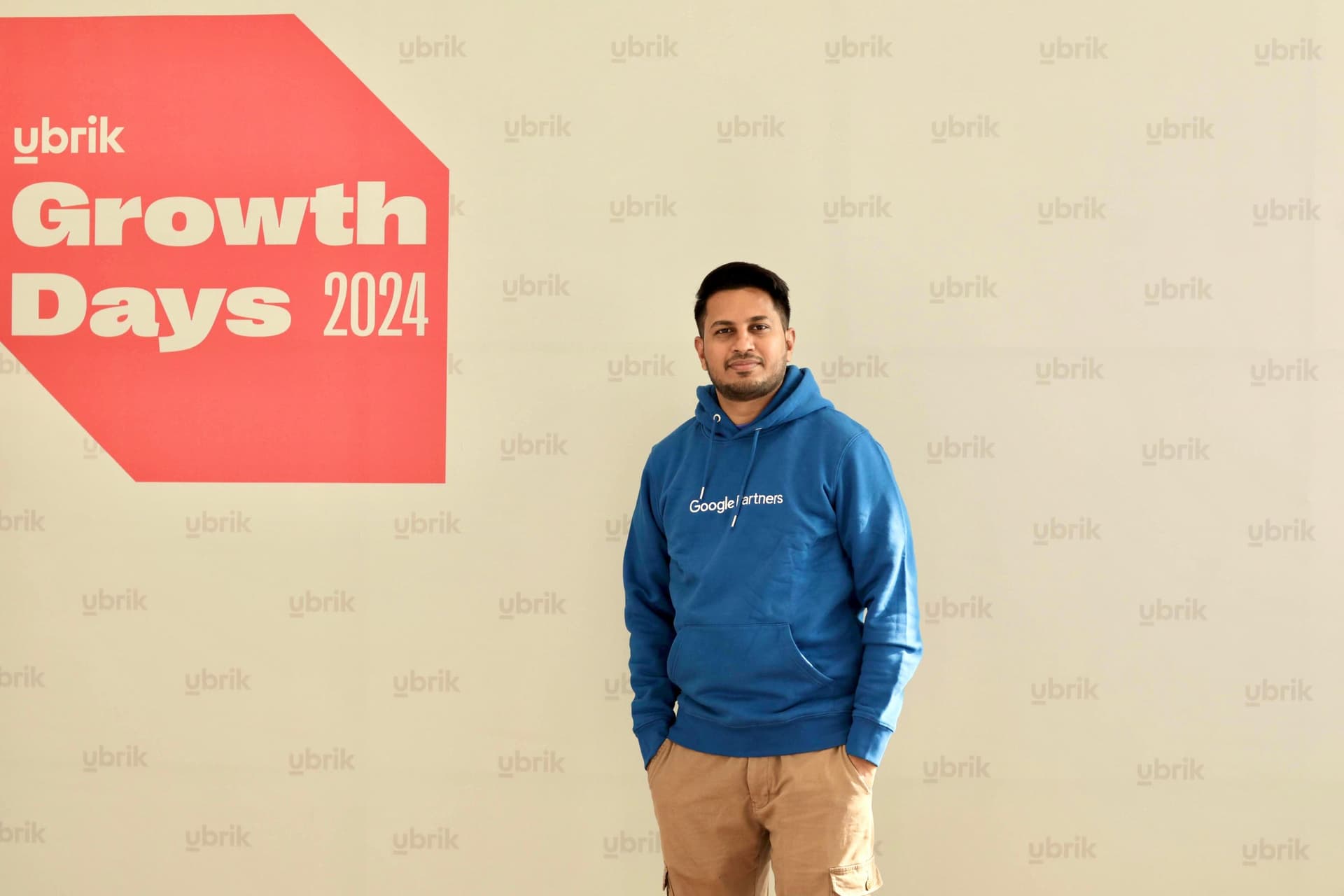
Raaquib Pathan
Last updated August 2026 · 15 min read
Key takeaways
- 85.59% of search referrals in Germany went to Google in July 2026, a full ten points below Google's share in several Gulf and Asian markets. (Source: Search Engine Market Share Germany, StatCounter)
- 26% of German enterprises with 10 or more employees used AI technologies in 2025, against an EU average of 20.0%. (Source: Nutzung von IKT in Unternehmen, Destatis)
- 60% of German enterprises not using AI named data protection and privacy concerns as a reason in 2025, up from 53% in 2024. (Source: Nutzung von IKT in Unternehmen, Destatis)
- 0.18% of tracked referrals in Germany came from AI chatbots in July 2026, against 96.92% from search engines. (Source: Search vs Social vs AI Chatbot Germany, StatCounter)
- 49% of German non-users of generative AI said they simply did not need it in 2025, against an EU average of 39%. (Source: Digital economy and society statistics, Eurostat)
- 73.07% of German AI-chatbot traffic went to ChatGPT in July 2026, with Google Gemini second at 11.38%. (Source: AI Chatbot Market Share Germany, StatCounter)
- 8% of US Google searches showing an AI summary produced a click on a traditional result in March 2025, against 15% when no summary appeared. (Source: Pew Research Center)
This page collects 84 SEO stats in Germany and adjacent AI-search markets, drawn from 6 sources and verified inside each source document rather than from search snippets. The data spans March 2025 to July 2026, with German search and AI-chatbot share current to July 2026.
Nearly half of these figures come from official statistics, Destatis and Eurostat, rather than from vendor research. Where a number is United States panel data, the bullet says so.
Search engine market share in Germany
Germany is one of the least Google-concentrated large markets in Europe, and that single fact changes the shape of a German SEO programme. Bing's share here is roughly triple what it is in the Gulf, and Ecosia, a Berlin-based search engine, holds measurable share in its home market.
- 85.59% of search referrals in Germany went to Google in July 2026.
- 7.12% of German search referrals went to Bing in July 2026, making it a meaningful second engine.
- 2.14% of German search referrals went to Yandex in July 2026.
- 2.05% of German search referrals went to Yahoo! in July 2026.
- 1.46% of German search referrals went to DuckDuckGo in July 2026.
- 1.25% of German search referrals went to Ecosia in July 2026.
Source for all statistics above: Search Engine Market Share Germany, StatCounter.
AI chatbot market share in Germany
Answer Engine Optimization (AEO) is the practice of structuring content so an AI assistant can extract and cite it inside a generated answer, rather than merely ranking it in a list of links. Which assistants matter differs by market, and the German mix is more fragmented than the global one, a point that shapes any set of AI SEO stats for Germany.
- 73.07% of AI chatbot traffic in Germany went to ChatGPT in July 2026.
- 11.38% of German AI chatbot traffic went to Google Gemini in July 2026, placing it second.
- 6.44% of German AI chatbot traffic went to Perplexity in July 2026.
- 4.73% of German AI chatbot traffic went to Claude in July 2026.
- 4.34% of German AI chatbot traffic went to Microsoft Copilot in July 2026.
- 0.03% of German AI chatbot traffic went to DeepSeek in July 2026.
- 77.92% of AI chatbot traffic worldwide went to ChatGPT in July 2026, a higher concentration than Germany's.
- 8.65% of global AI chatbot referrals came from Google Gemini in March 2026, overtaking Perplexity at 7.07% for the first time.
- 2.31% of global AI chatbot referrals came from Gemini in April 2025, before that rise.
Sources: AI Chatbot Market Share Germany and Worldwide, StatCounter; Gemini and Perplexity referral figures, StatCounter.
How much traffic do AI assistants actually send?
This is the cluster most LLM SEO stats content gets wrong. German AI adoption is rising steadily, but the referral traffic those tools send remains close to a rounding error, and lower than the world average.
- 0.18% of tracked referrals in Germany came from AI chatbots in July 2026.
- 96.92% of tracked referrals in Germany came from search engines in July 2026.
- 2.9% of tracked referrals in Germany came from social platforms in July 2026.
- 0.24% of tracked referrals worldwide came from AI chatbots in July 2026.
- 91.29% of tracked referrals worldwide came from search engines in July 2026.
Source for all statistics above: Search vs Social vs AI Chatbot Market Share, StatCounter. German and worldwide figures are both July 2026 and directly comparable.
How many German businesses use AI?
Germany's official ICT survey covers around 20,000 enterprises with 10 or more employees and is harmonised with Eurostat's methodology, which makes it directly comparable with other EU states. It shows adoption more than doubling in two years.
- 26% of German enterprises with 10 or more employees used AI technologies in 2025.
- 20% of German enterprises used AI technologies in 2024.
- 12% of German enterprises used AI technologies in 2023.
- 11% of German enterprises used AI technologies in 2021, when the indicator was first measured.
- 57% of German enterprises with 250 or more employees used AI technologies in 2025.
- 36% of German enterprises with 50 to 249 employees used AI technologies in 2025.
- 23% of German enterprises with 10 to 49 employees used AI technologies in 2025.
- 20,000 enterprises are surveyed annually for Germany's official ICT usage statistics.
- 54% of German enterprises used paid cloud services in 2025.
- 86% of large German enterprises used paid cloud services in 2025, against 65% of medium and 51% of small firms.
- 88% of German enterprises in the information and communication sector used cloud services in 2025.
- 45% and 43% were cloud adoption rates in German hospitality and in transport and storage respectively in 2025.
Sources for all statistics above: Nutzung von IKT in Unternehmen, Destatis; historical series, Destatis.
Why German businesses do not use AI
This is the most useful cluster in the dataset for anyone selling AI-related services in Germany, and it is almost entirely absent from English-language SEO content. Germany's statistics office asks non-adopters directly why they have not moved.
- 72% of German enterprises not using AI named a lack of knowledge as a reason in 2025.
- 62% of German enterprises not using AI named uncertainty about the legal consequences in 2025.
- 60% of German enterprises not using AI named data protection and privacy concerns in 2025.
- 53% of German enterprises not using AI named privacy concerns in 2024, the year before.
- 45% of German enterprises not using AI named incompatibility with existing equipment, software and systems in 2025.
- 44% of German enterprises not using AI named difficulties with data availability or quality in 2025.
- 32% of German enterprises not using AI named cost as a reason in 2025.
- 23% of German enterprises not using AI named ethical considerations in 2025.
- 18% of German enterprises not using AI judged it to have no useful application in their business in 2025.
- 20% of German enterprises not using AI had already considered adopting it in 2025.
Sources: 2025 figures, Nutzung von IKT in Unternehmen, Destatis; 2024 comparison, Destatis.
Germany against Europe on AI adoption
Germany sits in an unusual position: above the EU average on enterprise AI adoption, but well down the table on consumer AI usage. The two measures below come from different surveys with different bases, so they describe different things rather than contradicting each other.
- 20.0% of EU enterprises with 10 or more employees used AI technologies in 2025, up 6.5 percentage points from 13.5% in 2024.
- 7.7% and 8.1% were the equivalent EU figures in 2021 and 2023 respectively.
- 42.0%, 37.8% and 35.0% were the highest EU enterprise AI adoption rates in 2025, in Denmark, Finland and Sweden.
- 5.2%, 8.4% and 8.5% were the lowest EU enterprise rates in 2025, in Romania, Poland and Bulgaria.
- 11.8% of EU enterprises used AI to analyse written language in 2025, the most common single application.
- 9.5% of EU enterprises used AI to generate pictures, videos or audio in 2025, and 8.8% to generate written or spoken language.
- 32.7% of people aged 16 to 74 in the EU used generative AI tools in 2025.
- 25.1%, 15.1% and 9.4% were the EU shares using generative AI for personal purposes, work and formal education respectively in 2025.
- 31.1% of Germany's working-age population used a generative AI product in Q1 2026, ranking Germany 23rd worldwide.
- 28.6% and 26.5% were Germany's equivalent figures in H2 2025 and H1 2025.
- 47.8%, 42.2% and 42.1% were the Q1 2026 rates in France, the United Kingdom and the Netherlands, all well ahead of Germany.
Germany against its neighbours
| Measure | Germany | EU / world | Source |
|---|---|---|---|
| Enterprises using AI, 2025 | 26% | 20.0% (EU) | Eurostat / Destatis |
| Working-age AI diffusion, Q1 2026 | 31.1% | 17.8% (world) | Microsoft AIEI |
| AI diffusion rank, Q1 2026 | 23rd | n/a | Microsoft AIEI |
| France, working-age AI diffusion | n/a | 47.8% | Microsoft AIEI |
| United Kingdom, working-age AI diffusion | n/a | 42.2% | Microsoft AIEI |
| Non-users citing "no need", 2025 | 49% | 39% (EU) | Eurostat |
Sources: enterprise figures, Eurostat; individual generative AI use, Eurostat; working-age diffusion, Microsoft AI Economy Institute.
What AI Overviews do to click-through rates
The most rigorous behavioural evidence on AI summaries comes from a Pew Research Center study of 900 US adults who agreed to share their browsing data. These are United States figures. No German equivalent exists, so treat them as directional for Germany rather than as local measurement.
- 8% of visits to US Google search pages containing an AI summary produced a click on a traditional result in March 2025.
- 15% of visits to US Google search pages without an AI summary produced a click on a result in March 2025, nearly twice the rate.
- 1% of visits to US Google pages with an AI summary produced a click on a source cited inside that summary in March 2025.
- 26% of visits to US Google pages with an AI summary ended the browsing session entirely in March 2025, against 16% without one.
- 18% of all US Google searches in the study generated an AI summary in March 2025.
- 58% of US study participants performed at least one Google search that produced an AI summary during March 2025.
- 88% of the US AI summaries examined in March 2025 cited three or more sources.
- 67 words was the median length of a US Google AI summary in March 2025, ranging from 7 to 369 words.
- 8% of one- or two-word US searches produced an AI summary in March 2025, against 53% of searches of ten words or more.
- 60% of US searches beginning with a question word such as who, what, when or why produced an AI summary in March 2025.
- 36% of US searches containing both a noun and a verb produced an AI summary in March 2025.
- 6% of sources linked inside US AI summaries were .gov websites in March 2025, against 2% in standard results.
Source for all statistics above: Do people click on links in Google AI summaries?, Pew Research Center.
How AI prompts differ from search queries
Semrush analysed more than a billion lines of United States clickstream data from a 200-million-user panel between October 2024 and February 2026. US panel, not German. The behavioural patterns transfer; the absolute volumes do not.
- 206% was the year-over-year growth in ChatGPT's outbound referral traffic in the US, comparing January 2025 with January 2026.
- 21.6% of all ChatGPT referral traffic in the US went to Google as of February 2026.
- Just over 30% of all ChatGPT referral traffic in the US went to only ten domains as of February 2026.
- 34.5% of US ChatGPT queries had web search enabled in February 2026, down from 46% in late 2024.
- 1.75 was the average number of queries per US ChatGPT session in February 2026, a 50% rise across the study's final four months.
- 8.7 words was the average length of a search-enabled US ChatGPT prompt in January to February 2026, up from 4.7 words a year earlier.
- 13.5 words was the average length of a non-search US ChatGPT prompt in January to February 2026, down from 24.9 words a year earlier.
- 34.9% of US ChatGPT prompts matched traditional search keyword language by February 2026, up from 18.9% in October 2025.
- About 170,000 unique domains received ChatGPT referral traffic in the US sample in February 2026, up from roughly 71,000 in October 2024.
Source for all statistics above: ChatGPT traffic analysis: Insights from 17 months of clickstream data, Semrush.
Germany's digital baseline
Connectivity and commerce set the ceiling on everything above. Two figures here are Germany-specific and the rest are EU-level, so each bullet names its geography.
- 95% of German enterprises with 10 or more employees used a fixed internet connection in 2025.
- 67% of those German enterprises had a contracted data rate of at least 100 Mbit/s in 2025.
- 94% of individuals aged 16 to 74 in the EU used the internet in the three months before the 2025 survey.
- 4% of individuals aged 16 to 74 in the EU spent the whole of 2025 without using the internet.
- Almost 9 in 10 individuals in the EU connected to the internet using mobile devices in 2025.
- 74% of individuals aged 16 to 74 in the EU ordered or bought goods or services online in 2025.
- 52% of individuals in the EU used electronic identification to access online services in 2025.
- 78% of EU individuals who had used the internet in the previous 12 months bought or ordered online in 2025, up from 62% in 2015.
- 3 percentage points was Germany's change on that measure between 2015 and 2025, among the smallest increases in the EU.
- 49% of German non-users of generative AI cited a lack of need in 2025, against an EU average of 39% and Poland's 54%.
Sources: German enterprise figures, Nutzung von IKT in Unternehmen, Destatis; EU internet and individual figures, Eurostat; e-commerce figures, Eurostat.
Frequently asked questions
What is Google's market share in Germany?
Google held 85.59% of search engine referrals in Germany in July 2026. Bing was second at 7.12%, followed by Yandex at 2.14%, Yahoo! at 2.05%, DuckDuckGo at 1.46% and Ecosia at 1.25%. (Source: StatCounter)
How many German companies use AI?
26% of German enterprises with 10 or more employees used AI technologies in 2025, up from 20% in 2024 and 12% in 2023. Adoption rises sharply with size: 57% among firms with 250 or more employees, against 23% among those with 10 to 49. (Source: Destatis)
Why do German companies avoid AI?
Chiefly knowledge and compliance, not cost. Among German enterprises not using AI in 2025, 72% cited a lack of knowledge, 62% legal uncertainty and 60% data protection and privacy concerns. Only 32% cited cost. (Source: Destatis)
Which AI chatbot is most used in Germany?
ChatGPT, with 73.07% of German AI chatbot traffic in July 2026. Google Gemini followed at 11.38%, Perplexity at 6.44%, Claude at 4.73% and Microsoft Copilot at 4.34%. Germany is less ChatGPT-concentrated than the world average of 77.92%. (Source: StatCounter)
How much website traffic comes from AI chatbots in Germany?
Very little. AI chatbots produced 0.18% of tracked referrals in Germany in July 2026, against 96.92% from search engines and 2.9% from social platforms. Germany is more search-dependent than the world average of 91.29%. (Source: StatCounter)
How does Germany compare with the rest of Europe on AI?
It splits. German enterprise AI adoption of 26% in 2025 beat the EU average of 20.0%, but only 31.1% of Germany's working-age population used generative AI in Q1 2026, ranking 23rd worldwide and behind France, the UK and the Netherlands. (Sources: Eurostat, Microsoft AI Economy Institute)
Do AI Overviews reduce clicks?
Yes. In a March 2025 study of 900 US adults, 8% of visits to Google pages with an AI summary produced a click on a traditional result, against 15% without one. Clicks on sources cited inside summaries occurred on just 1% of visits. (Source: Pew Research Center)
Is traditional SEO still worth it in Germany in 2026?
The data says yes, more so than almost anywhere. Search delivers 96.92% of German referrals, and 21.6% of ChatGPT's US outbound referral traffic goes to Google itself, making classical ranking a gateway into AI discovery rather than a casualty of it. (Sources: StatCounter, Semrush)
Raaquib Pathan
SEO and AI Search Consultant, Dubai
Raaquib Pathan is an SEO and AI search consultant based in Dubai. He has worked in search since 2019 across agency, in-house SaaS and independent consulting, helping brands grow organic traffic and get cited inside AI answers.
Want your brand cited in AI answers?
Book a free strategy call. We look at where you show up across Google and AI search today, and the fastest path to being the source that gets cited.
AEO and GEO Consultant in Germany
Get German brands cited inside ChatGPT, Gemini and Google AI Overviews.
Read moreAI SearchAI SEO Consultant
GEO, AEO and LLM SEO for brands that want to be the cited source.
Read moreUpdatesSEO Updates Tracker
A living log of Google, Bing and AI-search changes, refreshed monthly.
Read more