
Ramadan SEO: When to Publish and What to Build (UAE)
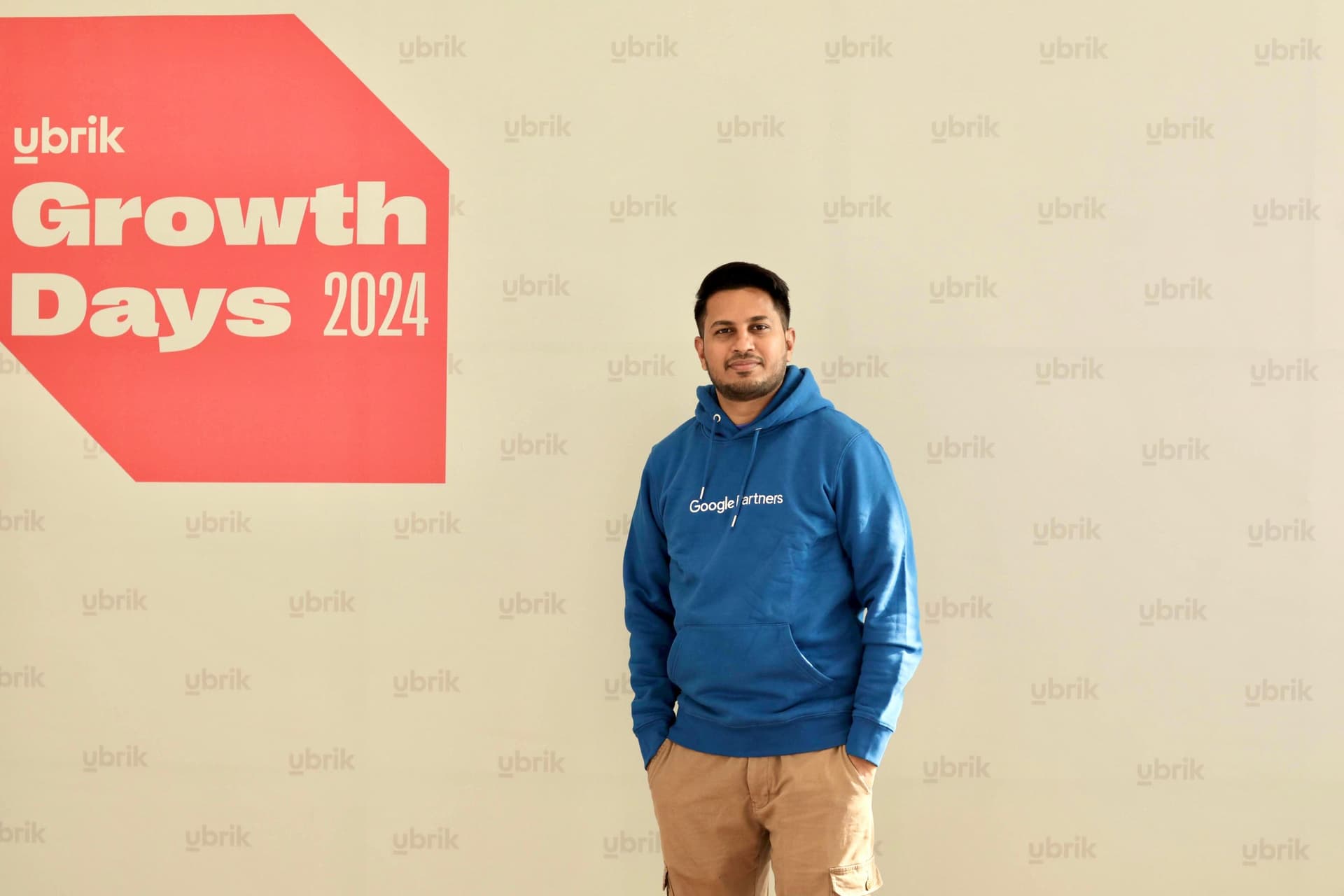
Raaquib Pathan
Last updated October 2026 · 11 min read
Key takeaways
- In the UAE, Google Trends interest in “ramadan” peaked in the week Ramadan began in every year from 2022 to 2026.
- Ramadan 2027 is expected to begin on 8 February 2027, so Ramadan pages should be live and indexed by early January 2027.
- Google recommends one recurring URL for a recurring event, not a new URL each year.
- Set Ramadan and Eid hours as special hours in Google Business Profile, so your regular hours return on their own.
- In my October 2026 test, five AI answer engines gave lead times of 4 to 8 weeks and none cited Google.
Ramadan search engine optimization (SEO) is the practice of getting Ramadan and Eid pages indexed, accurate and easy to find before search demand peaks in the United Arab Emirates (UAE). That peak arrives in the week the holy month begins, not in the run-up. For Ramadan 2027, it means pages live and indexed by early January 2027.
Most Ramadan SEO advice online gives a lead time with no data behind it. This guide uses Google's own guidance and my analysis of UAE search data.
What is Ramadan SEO, and why does timing decide the result?
Ramadan SEO is seasonal SEO tied to a date that moves every year. The tactics, from opening hours to Arabic and English pages, are ordinary. The hard part is the calendar. A page Google has not indexed when demand arrives misses the busiest week.
Ramadan follows the Hijri calendar, the Islamic lunar calendar. The UAE Government notes that the Islamic calendar has 354 days, so Ramadan arrives 11 days earlier every Gregorian year. The official start is confirmed only after the moon-sighting committee under the UAE Council for Fatwa meets.
Ramadan 2026 began on Wednesday 18 February 2026 in the UAE, as announced by the Presidential Court. Ibrahim Al Jarwan, Chairman of the Emirates Astronomical Society, expects Ramadan 2027 to begin on Monday 8 February 2027, subject to moon sighting.
The scale is large, and the most recent figure Google has published comes from 2023. Google reported that people in Egypt, Saudi Arabia and the UAE made 7.2 billion general searches during Ramadan 2023, a 21% rise on Ramadan 2022. For Ramadan marketing in the UAE, Google is where that search happens: Google held 93.47% of UAE search engine market share in September 2026, according to StatCounter.
When do Ramadan searches peak in the UAE?
Ramadan searches in the UAE peak in the week the holy month begins. My analysis of Google Trends data for “ramadan” in the UAE, January 2022 to October 2026, found the peak week matched the start week in all five years. Interest then fell back within a week.
Google Trends does not show search volumes. It shows relative interest on a scale of 0 to 100, based on a sample of Google searches, so it is good for timing and poor for size.
Here is the shape of Ramadan 2026, which began on 18 February:
| Week | Timing | Trends index |
|---|---|---|
| 4 to 10 January | About six weeks before | 6 |
| 1 to 7 February | Two weeks before | 11 |
| 8 to 14 February | The week before | 17 |
| 15 to 21 February | Start week | 85 |
| 22 to 28 February | Second week | 23 |
| 1 to 21 March | Rest of the month | 14 to 16 |
| From 22 March | After Eid | 1 |
Source: my analysis of Google Trends weekly data for “ramadan”, UAE, pulled 16 October 2026.
In my Google Trends analysis, interest six weeks before Ramadan 2026 stood at 7% of the peak. One week after the start, it had fallen to about a quarter.
Search volumes from Google Keyword Planner tell the same story for specific Ramadan search trends. Iftar is the meal that breaks the fast at sunset.
| Query | Language | Jan 2026 | Feb 2026 | Mar 2026 |
|---|---|---|---|---|
| ramadan timings | English | 3,600 | 60,500 | 18,100 |
| iftar dubai | English | 480 | 18,100 | 9,900 |
| ramadan offers | English | 880 | 5,400 | 1,600 |
| امساكية رمضان (Ramadan timetable) | Arabic | 390 | 6,600 | 2,400 |
| عروض رمضان (Ramadan offers) | Arabic | 210 | 880 | 170 |
Source: my analysis of Google Keyword Planner data, UAE, pulled 16 October 2026. Volumes are Google's rounded ranges.
Three patterns in the Keyword Planner data matter for planning:
- The off-season is close to zero. “ramadan timings” drew 60,500 searches in February 2026 and 90 in July 2026.
- Eid demand comes later. “eid offers” reached 1,600 searches in March 2026 and peaked again at 2,400 in May 2026.
- Date searches start months ahead. “رمضان 2027” (Ramadan 2027) reached 18,100 searches in September 2026, five months before the expected start.
Language changes by query. In Keyword Planner, “Ramadan offers” drew 5,400 English searches in February 2026 against 880 in Arabic, yet the Arabic timetable query reached 6,600. One language does not cover the season.
When should Ramadan pages go live?
For an expected 8 February 2027 start, have your Ramadan pages live and indexed by early January 2027. That gives Google about five weeks before demand climbs in early February, with room if the official date moves by a day.
Google's 2020 guidance for sales events says to create the landing page well before the event so Googlebot can discover and index it. Googlebot is Google's crawler.
My recommended plan for Ramadan 2027:
| When | What to do |
|---|---|
| October to November 2026 | Research English and Arabic queries; review last season's pages in Google Search Console |
| December 2026 | Publish or refresh core Ramadan pages on their permanent URLs; link them from the home page |
| Early January 2027 | Confirm the pages are indexed; add supporting content |
| Late January 2027 | Add offers and prices; set Ramadan hours on Google Business Profile |
| The evening before the expected start | Confirm the official date; update dates on the pages |
| After Eid | Remove expired offers; keep the pages live |
Illustrative plan for an expected 8 February 2027 start. Author's recommendation, based on the demand data above.
The exact date is unknown until the night before, but that does not stop you publishing. Mark the date as expected, then update the page and ask Google to recrawl once the date is confirmed.
Should you build a new Ramadan page every year?
No. Google recommends one recurring URL for a recurring event: the same web address, reused every season, with the year in the page title instead. A new page such as /ramadan-2027/ each year is the seasonal SEO pattern Google advises against.
Google's guidance is direct. Alan Kent of Google's Search Relations team wrote in 2020: “Use a recurring URL, not a new URL for each occurrence of the event.” His example was /sale/black-friday, not /sale/2020/black-friday. The advice was written for Black Friday, but it fits any event that returns each year.
| URL pattern | What it means | What Google recommends |
|---|---|---|
| /ramadan-2027/ | A new address every season | Not recommended |
| /ramadan/ | The same address every season | A recurring URL, linked from the home page |
Source: Google Search Central Blog guidance on recurring sales-event URLs, 2020 and 2021.
Google's 2021 follow-up repeats the advice to reuse the same URL each year and puts the event name in the page title instead, such as “Black Friday 2021 Deals”.
To carry a page from one season to the next:
- Pick one permanent URL per seasonal page, such as /ramadan/ and /ramadan-offers/.
- Put the year in the title and the copy, not in the URL.
- Link to the page from your home page during the season. Google uses links between pages to judge their relative importance.
- Ask Google to recrawl the page after each update.
- After Eid, remove expired offers but keep the page live and indexable.
What Ramadan content should a UAE business publish?
For a UAE business, publish the pages your customers search for at each stage of the season: timings and iftar first, offers and gifts alongside, Eid last. Each page needs real detail, such as opening hours, menus, prices and dates.
| Business type | Pages to build | Searches it serves |
|---|---|---|
| Restaurants and cafes | Iftar and suhoor menus, opening hours | “iftar dubai” |
| Retail and ecommerce | Ramadan offers page, gift guide | “ramadan offers”, “ramadan gifts dubai” |
| Malls, clinics and services | Ramadan timings and hours page | “ramadan timings” |
| Any business with Eid sales | Eid offers page on its own permanent URL | “eid offers” |
| Brands with Arabic-speaking customers | Arabic pages researched separately | “امساكية رمضان”, “عروض رمضان” |
Author's recommendation. Searches are from the Keyword Planner data above.
Suhoor is the meal eaten before dawn. “ramadan gifts dubai” reached 390 searches in February 2026 in the same Keyword Planner data: small, but buying intent.
Google also reported that search interest for “house cleaning before Ramadan” rose 23X across Egypt, Saudi Arabia and the UAE in the lead-up to Ramadan 2023. Guides published in January, written in-house or through SEO content writing services in Dubai, can catch that early demand.
Research Arabic and English separately, because the queries differ. My guide to bilingual SEO in the UAE covers how Google reads Arabic and English pages and how to connect them with hreflang. Hreflang is the markup that tells Google which language version to show.
How do you set Ramadan and Eid hours on Google Business Profile?
Set Ramadan and Eid hours as special hours in Google Business Profile, date by date, instead of changing your regular hours. Special hours apply only to the dates you set. Your regular hours come back after Eid without anyone having to remember to change them.
Under UAE labor law, private-sector working hours are reduced by two hours a day during Ramadan. The UAE Government also notes that some restaurants close during the day and open fully at iftar. “Do restaurants open during Ramadan in Dubai?” appears in Google's People Also Ask results for this topic.
- Add each Ramadan date under special hours in your Business Profile, with that day's opening and closing times.
- Add Eid dates, including closures. Google allows special hours for closures of up to 6 days in a row, and asks you to mark the business temporarily closed for 7 days or more.
- Use More hours for services with different times, such as delivery or takeout.
- For several branches, use the Special hours column in Google's bulk spreadsheet. My guide to multi-location SEO in the UAE covers bulk tools and store codes, the unique IDs for each branch.
Watch for suggested edits. Google blocked 79 million inaccurate or unverified edits to Business Profiles in 2025. Since April 2026, Google has been rolling out email alerts so verified owners can review important edits before they go live.
The basics are in my guide to Google Business Profile setup in Dubai.
What do AI answers get wrong about Ramadan SEO?
The AI answers I tested took their Ramadan SEO timing from agency blogs, not from Google. On 16 October 2026, I asked five AI answer engines the same planning question. All five gave lead times between 4 and 8 weeks and leaned on agency or vendor blogs. None cited Google's recurring-URL guidance.
Method: Google AI Overviews and Google AI Mode ran live, signed out, with UAE settings. ChatGPT ran through a scraper set to the UAE. Perplexity and Claude ran through their application programming interfaces (APIs) with web search on, and API answers can differ from the consumer apps.
| Surface | Lead time given | Google documentation cited | What stood out |
|---|---|---|---|
| Google AI Overviews | 6 to 8 weeks | No | An “under 2 seconds” load target and an 8 PM to 11 PM post-iftar window, both unsourced |
| Google AI Mode | 4 to 6 weeks | No | Framed permanent URLs as protecting “domain authority”, not Google's stated advice |
| ChatGPT | 6 to 8 weeks | Yes, but not the URL guidance | Cited a Google Ad Manager page about ad revenue as SEO timing support |
| Perplexity | 6 to 8 weeks | No | All eight sources were agencies |
| Claude | 4 to 6 weeks minimum | No | Said it could not retrieve Google's URL guidance and flagged its sources as agency blogs |
Source: author's first-party test, one prompt per surface, 16 October 2026.
AI answers reach UAE users: as of October 2026, Google lists the UAE and Arabic as supported for AI Overviews, so your team will ask these tools the same question. The gap is the opening for Answer Engine Optimization (AEO) and Generative Engine Optimization (GEO), the work of getting pages quoted in AI answers. These systems lack a primary source on this question.
How do you measure Ramadan SEO and plan the next season?
Compare Ramadan with Ramadan, not February with February. Ramadan 2026 began on 18 February and Ramadan 2027 is expected on 8 February, so a calendar-month comparison mixes pre-Ramadan and Ramadan weeks. Mark each season's dates in Google Search Console so the two seasons line up.
Google Search Console added custom annotations to its Performance reports in November 2025. You can add a dated note of up to 120 characters, and Google's own examples include external events such as a holiday.
After Eid, run this check:
- Annotate the start of Ramadan, the start of Eid and each page update in Search Console.
- Compare the start week of this Ramadan with the start week of the last one.
- Check which permanent URLs earned impressions in the start week, and which were still unindexed.
- Review Arabic and English queries separately, and check your Business Profile hours for suggested edits.
- List the pages to refresh before next October.
Most Ramadan SEO problems I see are calendar problems: pages built in the week the month starts, a new URL every year, and hours that never reach Google Business Profile.
When I build an SEO strategy in Dubai, the Ramadan and Eid season goes into the 12-month roadmap. Dates are worked back from the expected start, with one permanent URL per seasonal page and Arabic and English demand checked separately. After Eid, I compare the season against the last one by Ramadan dates, so the next plan starts from your own data.
Frequently asked questions
When does Ramadan 2027 start in the UAE?
Ramadan 2027 is expected to begin on Monday 8 February 2027 in the UAE, according to Ibrahim Al Jarwan, Chairman of the Emirates Astronomical Society. The moon-sighting committee confirms the official date on the evening before, so plan from the expected date and update your pages once it is confirmed.
How early should I publish Ramadan pages?
Have Ramadan pages live and indexed by early January 2027 for an expected 8 February start. Google's 2020 guidance says to create sales-event pages well before the event, and UAE search interest peaks in the week Ramadan begins.
Should I create a new Ramadan page every year?
Keep one permanent Ramadan page rather than a new one each year, because Google recommends a recurring URL for recurring events, such as /ramadan/ rather than /ramadan-2027/. Put the year in the page title, link the page from your home page, and ask Google to recrawl it after each update.
Do Google AI Overviews and AI Mode answer Ramadan SEO questions correctly?
Only partly: in my 16 October 2026 test, Google AI Overviews and Google AI Mode both gave lead times taken from agency blogs and cited no Google documentation. Check any AI answer against Google's own guidance before you plan a season around it.
Raaquib Pathan
SEO and AI Search Consultant, Dubai
Raaquib Pathan is an SEO and AI search consultant based in Dubai. He has worked in search since 2019 across agency, in-house SaaS and independent consulting, helping brands grow organic traffic and get cited inside AI answers.
Want your brand cited in AI answers?
Book a free strategy call. We look at where you show up across Google and AI search today, and the fastest path to being the source that gets cited.
SEO Strategy in Dubai
A 12-month roadmap with seasonal demand, Arabic and English, worked into the plan.
Read moreConsultingBilingual SEO in the UAE
How Google reads Arabic and English pages, hreflang, and the URL structure to pick.
Read moreConsultingGoogle Business Profile in Dubai
Address eligibility, verification, ranking fields and review rules, from Google's own guidelines.
Read more