
SEO vs GEO: What Changes, What Doesn't (2026)
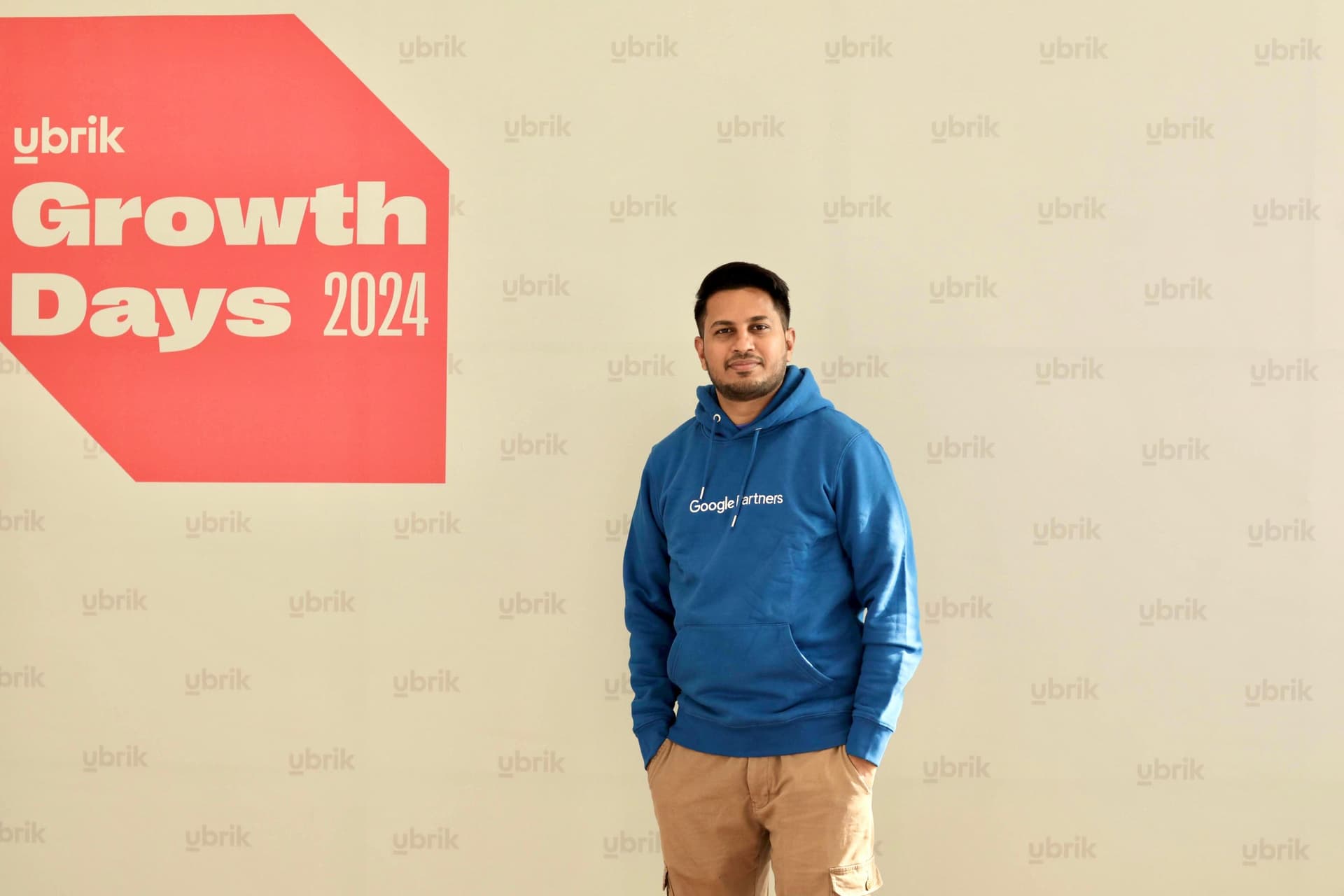
Raaquib Pathan
Last updated September 2026 · 9 min read
Key takeaways
- SEO optimizes a page to be ranked and clicked. Generative Engine Optimization (GEO) optimizes a source to be retrieved and cited inside an answer the model writes.
- Google’s own documentation, updated July 2026, says optimizing for its generative AI features is still SEO, and lists popular tactics you can skip.
- Outside Google, the difference is operational. OpenAI documents that a site opted out of its search crawler will not appear in ChatGPT search answers.
- Measurement is where the two part ways. Google Search Console reports impressions inside AI features, with no clicks, no click-through rate and no position.
- Do SEO first. A page that cannot be crawled or indexed cannot be retrieved by either system.
The SEO vs GEO question reaches me most weeks, usually attached to a proposal with GEO priced as a separate line item. The honest answer has two halves, and most articles give you only one.
Search Engine Optimization (SEO) is the practice of making a page rank in a search engine’s results. Generative Engine Optimization (GEO) is the practice of making a source likely to be retrieved and cited inside an answer written by a generative engine such as ChatGPT, Perplexity or Google AI Overviews. The two share a foundation. They diverge at the crawler, at the controls, and at the reporting.
What is the difference between SEO and GEO?
SEO aims to place your page in a ranked list of links so a person clicks through to your site. GEO aims to make your page one of the sources a model pulls from when it composes an answer, so your brand gets named inside that answer. SEO’s unit of success is a position. GEO’s unit of success is a citation.
The distinction sounds academic until you look at what people now see on the page. In Pew Research Center’s March 2025 browsing study of 900 US adults, 18% of all Google searches produced an AI summary, and question-shaped queries produced one 60% of the time.
Click behavior moved with it. Pew recorded that users clicked a traditional search result in 8% of visits where an AI summary appeared, against 15% of visits without one. I have collected the verified AI search statistics for the USA behind those numbers in one place.
Ranking still matters. It simply buys less traffic on the queries where an answer gets generated, which is why being inside the answer became an objective of its own.
SEO, AEO, GEO and LLM SEO: what each term actually means
Four terms, heavy overlap, and a lot of invoices riding on the difference. Here is the version I use with clients.
| Term | What it optimizes for | Primary surface |
|---|---|---|
| SEO | A ranked link people click | Google and Bing results pages |
| AEO | An extracted direct answer | Featured snippets, AI Overviews, voice |
| GEO | A citation inside a generated answer | ChatGPT, Perplexity, Gemini, AI Overviews |
| LLM SEO | Trust signals a specific model uses to pick sources | Individual assistants |
Answer Engine Optimization (AEO) is the older idea. AEO predates generative answers and covers any surface returning an answer instead of a list. GEO is narrower and newer, and targets engines that synthesize a response from several sources at once. LLM SEO is not a fifth discipline. It is GEO described from the model’s side rather than the page’s side.
So when a founder asks me about SEO vs AEO, SEO vs AI SEO, or SEO vs LLM SEO, the useful answer is that only one of those pairs is a genuine choice, and it is not the one in the question. The genuine choice is how much of your effort goes into being findable against being quotable.
Google says GEO is still SEO. Here is what that leaves out
Google Search states in its guide to optimizing for generative AI features that this work is “optimizing for the search experience, and thus still SEO”. The line is not throwaway. The same guide explains that these features are grounded in Google’s core ranking systems through retrieval-augmented generation (RAG), which retrieves pages from the Search index before the model writes anything.
Google then names tactics you can ignore for Google Search specifically. Three of them are being sold hard right now:
- llms.txt and similar files. Google states Google Search does not use them.
- Chunking content into small pieces so a model can parse it. Google states there is no such requirement and no ideal page length.
- Structured data as an AI visibility lever. Google states it is not required for generative AI features, while remaining worthwhile for rich results.
I have tested the first of those on client sites and watched nothing move in Google that I could attribute to the file. That matches the documentation, so I stopped recommending it as a priority.
Here is the part the quote leaves out. Google is describing Google. The statement covers AI Overviews and AI Mode, both grounded in Google’s own index. It says nothing about how ChatGPT, Claude or Perplexity choose their sources, because Google does not run them. Treating “GEO is still SEO” as the complete answer means optimizing for one engine and assuming the rest behave identically. They do not.
Positions like this one shift quietly, so I keep a monthly SEO updates tracker logging every confirmed change with its source.
SEO vs GEO: where the two genuinely diverge
The divergence is not philosophical. It sits in the plumbing.
| Dimension | SEO | GEO |
|---|---|---|
| Goal | Rank a page | Get a source cited |
| Crawler | Googlebot, Bingbot | Separate AI crawlers per platform |
| Opt-out control | One robots.txt decision | One decision per bot, per platform |
| Reported metric | Clicks, impressions, position | Impressions only, or nothing |
| Feedback loop | Days to weeks | Undefined and unpublished |
The crawler row is what catches teams out. OpenAI runs separate robots for separate jobs, and documents that sites opted out of OAI-SearchBot will not be shown in ChatGPT search answers, independently of whether GPTBot is allowed. Anthropic documents the same pattern with three separate robots, where disabling Claude-SearchBot stops its system indexing your content for search.
Read those two sentences again with a security template in mind. Plenty of sites blocked “AI bots” wholesale across 2024 and 2025, often through a CDN rule nobody wrote down.
The result is a page ranking first on Google that ChatGPT cannot retrieve at all. No rank tracker will ever show you this, because nothing about the Google ranking is broken. That gap is the clearest case for treating GEO as separate work, and auditing it takes about ten minutes.
What actually gets a page cited by AI?
Sourcing gets a page cited, not keyword placement. The strongest published evidence remains the paper that named the field: a KDD 2024 study by Pranjal Aggarwal and five co-authors, built on a 10,000-query benchmark. Its top-performing methods all added credibility signals to the page rather than optimizing its wording for a query.
The authors reported that their methods could “boost visibility by up to 40%” in the 2024 KDD study’s generative engine tests. Treat that as a ceiling rather than an average. In the study’s own results table, the three strongest methods were adding citations, adding quotations from credible sources, and adding statistics, each producing a 30 to 40% relative improvement on its position-adjusted word count metric.
One finding should change how you brief writers. The authors tested keyword stuffing, the classic SEO move, and found it offered little to no improvement. On Perplexity, it measured worse than doing nothing.
Two caveats I would want if I were reading this. The experiments ran on 2024-era models, so the specific margins have almost certainly shifted since. And the paper carries an uncomfortable finding for market leaders: lower-ranked sources gained most, with fifth-ranked pages gaining 115.1% under the citation method while top-ranked pages lost 30.3% of visibility on average.
How do you measure GEO when there is no rank tracker?
You measure proxies, and you say so out loud. Google Search Console now includes a Generative AI performance report, rolled out to all websites worldwide as of August 31, 2026. The report covers AI Overviews and AI Mode, and Google lists no other generative surface in it today.
The report gives you impressions. Not clicks, not click-through rate, not position. That is the entire dataset for the largest AI surface there is.
Everywhere else you are working with referral sessions in Google Analytics 4 and manual prompt testing. No platform publishes how often it cited you, or on which prompt.
In my own work with a German B2B software company in the European funding market, the site launched with no backlinks and no history. Across three months of answer-first content and technical work, it passed 2,000 organic clicks a month and crossed 100,000 generative AI impressions in Search Console. The full AI SEO case study for that SaaS launch carries the caveat openly: several tactics ran in parallel, so I can show what moved together, not which single change caused what.
One more measurable thing, worth knowing before you plan content. In Pew’s sample, Wikipedia, YouTube and Reddit together supplied 15% of the sources listed in AI summaries, and government domains supplied 6% against 2% in standard results. Your competition for a citation is often not another company.
What I check first on a client site
Before anyone writes a word of new content, I run this list. It takes half a day, and it usually finds something.
- Read robots.txt line by line. Confirm which AI crawlers are allowed, per bot, not per company.
- Check the CDN and firewall rules separately. They override robots.txt, and nobody remembers setting them.
- Confirm the pages you care about are indexed and eligible to be shown with a snippet.
- Open the Search Console generative AI report and record the baseline before changing anything.
- Run 20 buyer-shaped prompts across the assistants your market uses, and note who gets named.
- Check that every important claim on your key pages carries a named source and a date.
Most of what that audit surfaces is not a GEO problem. It is an indexation problem, a rendering problem, or a firewall rule, and all three quietly cap AI visibility before content work even starts. If you would rather someone else ran it, AI SEO consulting is the work I do: one senior consultant, running the audit and owning the outcome.
Frequently asked questions
Does GEO replace SEO?
No. Google's generative features are grounded in the same Search index, so a page that is not crawlable or indexed is not eligible to appear in them. SEO is the entry requirement. GEO is what you do once you are in the index and want to be the cited source. (Source: Google Search Central)
Do I need an llms.txt file?
Not for Google. Google's documentation states plainly that Google Search does not use these files, and that having one neither helps nor harms rankings. Other systems may read it. Treat it as optional housekeeping rather than the thing blocking your AI citations. (Source: Google Search Central)
Does schema markup get me cited by AI?
Google states structured data is not required for its generative AI features, and that no special markup exists for them. Keep using it, because it still earns rich results in classic search. Do not budget for it as your AI visibility strategy, because the documentation does not support that. (Source: Google Search Central)
Should I do SEO or GEO first?
SEO first, every time. Fix crawling, indexation and rendering, then work on being quotable: clear definitions, self-contained sections, and a named source beside every number. The second job costs much less once the first is done, and it fails completely if the first is skipped.
Raaquib Pathan
SEO and AI Search Consultant, Dubai
Raaquib Pathan is an SEO and AI search consultant based in Dubai. He has worked in search since 2019 across agency, in-house SaaS and independent consulting, helping brands grow organic traffic and get cited inside AI answers.
Want your brand cited in AI answers?
Book a free strategy call. We look at where you show up across Google and AI search today, and the fastest path to being the source that gets cited.
What Is GEO?
Generative Engine Optimization explained, and what Google says you can safely ignore.
Read moreAI SearchSEO Stats in USA
61 verified SEO and AI search statistics for the USA in 2026.
Read moreAI SearchAI SEO Consultant
GEO, AEO and LLM SEO for brands that want to be the cited source.
Read more